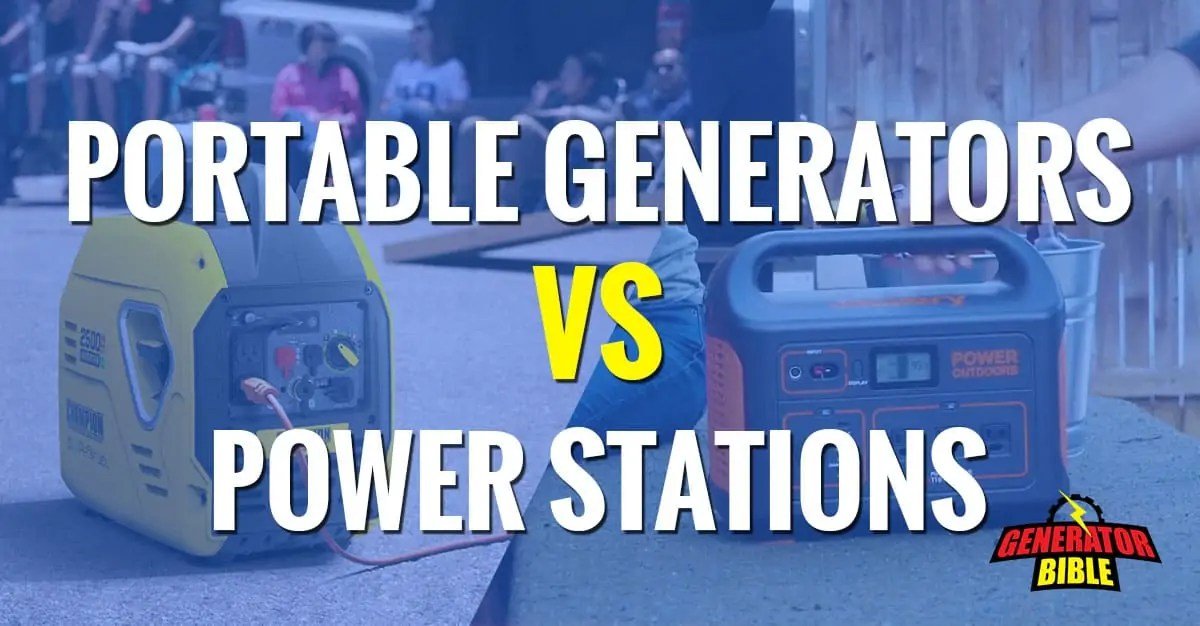
When the lights go out, the grid fails, or you simply venture far from an outlet, the need for reliable, portable power becomes immediately clear. For years, the rumbling drone of a traditional generator was the go-to solution, a familiar sound of backup and resilience. But as technology evolves and our focus shifts towards sustainability and convenience, a diverse landscape of portable power solutions has emerged, including the surprisingly effective, human-powered bike generator.
The choice isn't just about raw power anymore; it's about noise, environmental impact, portability, and even the effort you're willing to invest. Understanding the nuances between a traditional gas guzzler, a silent battery station, and the unique appeal of a bike generator is crucial for making an informed decision that truly suits your needs.
At a Glance: Key Portable Power Takeaways
- Traditional Fuel Generators: High power output, best for heavy loads and extended operations, but noisy, emissions-heavy, and fuel-dependent.
- Portable Power Stations (PPS): Silent, clean, compact, versatile, and easily rechargeable (often with solar), ideal for electronics, small appliances, and indoor use.
- Bike Generators: Human-powered, silent, emission-free, offer fitness benefits, extremely low output but provide ultimate self-sufficiency and infinite "fuel" (your energy).
- Solar Panels: A fantastic companion, especially for PPS, offering clean, renewable charging but dependent on sunlight and initial investment.
- The Right Choice: Depends entirely on your specific power needs, environmental priorities, budget, and desired level of effort.
Understanding the Portable Power Landscape
The quest for off-grid or emergency power has spurred innovation, giving us several distinct approaches to keeping our devices charged and our essentials running. While each solution aims to provide electricity, they do so with fundamentally different mechanisms, leading to vastly different user experiences and applications. To fully grasp where bike generators fit into this picture, we first need a baseline understanding of the other contenders. You'll find there are many types of portable generators available today, each with specific advantages.
The Gritty Reality: Traditional Fuel Generators
For decades, the standard for robust, on-demand power has been the traditional fuel generator. These machines convert fuel (gasoline, diesel, propane) into electricity via an internal combustion engine. They're workhorses, capable of powering everything from construction sites to entire homes during an outage.
- Noise Levels: Let's be frank: they're loud. The cacophony of a gas or diesel engine running can be incredibly disruptive, making them unsuitable for quiet neighborhoods, campsites, or any indoor use. This constant thrumming is a significant drawback for many users, especially during extended periods of use.
- Fuel & Maintenance: Fuel dependency is their defining characteristic. This means not only needing to store potentially volatile fuel but also regular refills, oil changes, and engine tune-ups. The cost and effort of maintenance, coupled with fluctuating fuel prices and storage concerns, add to their operational burden.
- Portability & Flexibility: Traditional generators are heavy and bulky. While many come with wheels, moving them around often requires significant effort or even specialized equipment. They are designed for stationary or semi-permanent use rather than nimble relocation.
- Environmental Impact: Here's where they falter significantly. Burning fossil fuels releases carbon dioxide and other harmful pollutants into the atmosphere, contributing to air quality issues and climate change. This makes them a less appealing option for environmentally conscious users or for scenarios where clean air is paramount.
- Power Output & Application: This is their undisputed strong suit. Traditional generators can deliver substantial power, easily handling heavy-duty appliances, power tools, and even whole-house backup for an emergency power generator. When you need continuous, high wattage for extended periods, they often remain the most practical solution.
In essence, traditional generators are powerful and reliable for demanding tasks, but they come with significant trade-offs in noise, environmental impact, and convenience.
The Silent Revolution: Portable Power Stations (PPS)
Portable Power Stations, often referred to as battery generators or solar generators (when paired with panels), represent a modern shift in portable power. These units are essentially large, rechargeable batteries housed in a compact, portable casing, equipped with various output ports (AC, DC, USB) to power diverse devices.
- Noise Levels: The biggest contrast to traditional generators is their absolute silence. Operating purely on battery power, they produce no noise, making them ideal for indoor use, camping, tailgating, or any situation where peace and quiet are valued.
- Fuel & Maintenance: No fuel required, ever. They simply recharge via a wall outlet, car charger, or, most popularly, via solar panels. Maintenance is minimal, typically involving keeping the unit charged and occasionally updating firmware. This ease of use and lack of fuel dependence is a major draw.
- Portability & Flexibility: PPS units are designed for portability. They are significantly lighter and more compact than traditional generators, often featuring built-in handles for easy transport. Their versatility extends to being able to power sensitive electronics without fear of voltage spikes, unlike some older traditional generators.
- Environmental Impact: When charged from renewable sources like solar or grid electricity (depending on the source), PPS offer a clean energy solution. They produce zero emissions during operation, aligning perfectly with sustainable living practices and the push for sustainable energy for home solutions.
- Power Output & Application: While generally not matching the peak output of large traditional generators, modern PPS units have come a long way. They can power essential devices, small to medium appliances, and a wide array of electronics. Many now offer impressive wattage for short bursts and modular systems allow for expandable capacity. They are excellent for camping, van life, powering drones, medical devices, and as home backup for critical items.
Portable power stations are the go-to for quiet, clean, and convenient power, especially for electronics and smaller appliances, and they truly shine when paired with solar power solutions.
The Human Element: Bike Generators
Now, let's introduce the underdog, the dark horse of portable power: the bike generator. This ingenious system harnesses human kinetic energy—your pedaling power—and converts it into electricity. It's a niche solution, but one that offers unparalleled independence and a unique set of benefits. If you're looking to Learn about bike generators, you've come to the right place to understand their role.
- How They Work: At its simplest, a bike generator consists of a bicycle (often a stationary one or a standard bike mounted on a stand) connected to a generator head. As you pedal, the spinning wheel drives the generator, which produces DC electricity. This power is then typically fed into a charge controller and a battery bank for storage, from which you can then draw AC power via an inverter.
- Noise Levels: Absolutely silent, save for the gentle whir of the bicycle chain and the generator itself. This makes them perfect for scenarios demanding absolute quiet, or simply for generating power without disturbing anyone.
- Fuel & Maintenance: Your body is the fuel. This means infinite, free "fuel" as long as you're able to pedal. Maintenance is primarily bike maintenance – keeping the chain oiled, tires inflated, and the generator clean. No trips to the gas station, no fuel storage concerns.
- Portability & Flexibility: A bike generator setup can range from a relatively bulky stationary unit to a highly portable system where a standard bicycle is simply mounted on a portable stand. The bike itself is, of course, highly portable. This unique flexibility means you can generate power almost anywhere you can take a bike and have the energy to pedal.
- Environmental Impact: This is the cleanest power generation method. Zero emissions, zero waste (beyond your sweat!). It's the ultimate in sustainable, renewable energy, powered purely by your own effort.
- Power Output & Application: This is where the reality check comes in. A typical person can sustainably generate about 75-150 watts through continuous pedaling. While athletes can hit higher numbers for short bursts, it's a far cry from the kilowatts produced by traditional generators. Therefore, bike generators are best suited for charging small electronics (phones, tablets, laptops), powering LED lights, and contributing to a small battery bank for off-grid power solutions. They are ideal for emergency preparedness, remote camping, educational demonstrations, or simply adding a unique fitness component to your power generation.
Bike generators are not for powering your refrigerator, but for personal, silent, and truly independent power, they offer a compelling and uniquely satisfying solution.
Direct Comparison: Bike Generators vs. The Rest by Key Factors
Let's put them head-to-head on the criteria that matter most when you're looking for a portable power solution.
Power Output & Endurance
- Traditional Generators: King of high, continuous output. Can run refrigerators, power tools, well pumps for hours or days with sufficient fuel.
- Portable Power Stations: Good for moderate, intermittent power. Can run laptops, TVs, small appliances for several hours, but battery capacity dictates run time. Max output depends on the inverter.
- Bike Generators: Lowest continuous output, limited by human stamina (typically 50-200 watts). However, technically offers "infinite" endurance as long as you can pedal and have a battery bank to store the energy. You won't run heavy machinery, but you can keep essential communication devices alive indefinitely.
Environmental Impact & Fuel
- Traditional Generators: High emissions, dependent on fossil fuels. Significant carbon footprint.
- Portable Power Stations: Zero emissions during operation. Fuel is electricity, which can come from clean sources (solar, wind, grid).
- Bike Generators: Zero emissions. Fuel is human caloric intake. The most environmentally friendly option possible.
Noise & User Experience
- Traditional Generators: Loud, disruptive, often requiring ear protection or placement far from living areas.
- Portable Power Stations: Completely silent, allowing for indoor use and undisturbed enjoyment of nature.
- Bike Generators: Near-silent, with only the mechanical sounds of cycling. A meditative, active experience.
Portability & Setup
- Traditional Generators: Heavy, bulky, often require two people to lift or dedicated transport. Setup involves fueling and starting the engine.
- Portable Power Stations: Highly portable, often one-person carry. Setup is plug-and-play.
- Bike Generators: Varies. A dedicated stationary unit can be somewhat heavy, but a system using a standard bike on a portable stand is quite flexible. Requires assembly and connection to a battery system.
Cost & Maintenance
- Traditional Generators: Moderate to high initial cost. High ongoing fuel costs, regular engine maintenance (oil changes, spark plugs, filters).
- Portable Power Stations: Moderate to high initial cost. Low ongoing "fuel" cost (electricity from grid or free from solar). Minimal maintenance. Battery degradation over many cycles is a long-term consideration.
- Bike Generators: Low to moderate initial cost (if using an existing bike, higher for dedicated units). Zero ongoing "fuel" cost. Maintenance is largely bicycle maintenance, which is generally inexpensive.
Versatility & Application
- Traditional Generators: Best for critical home backup, construction sites, large events, or anything requiring substantial, sustained AC power.
- Portable Power Stations: Excellent for camping, RVs, van life, remote work, powering drones, photography gear, CPAP machines, and as light-duty home backup.
- Bike Generators: Niche but powerful for true off-grid independence, emergency communication, small device charging, educational purposes, fitness integration, and ultralight camping where silence and self-reliance are paramount.
When Does a Bike Generator Truly Shine? Practical Applications
While not a direct competitor to a roaring 5000-watt generator, bike generators carve out a crucial niche where other solutions fall short or are simply overkill.
- Ultimate Self-Sufficiency: In a long-term grid-down scenario, or when truly living off the grid, a bike generator ensures you can always generate power, regardless of fuel supplies or sunlight (though often paired with solar for optimal off-grid power). It’s the ultimate expression of personal independence.
- Emergency Communication: Keeping your phone, satellite messenger, or ham radio charged during a widespread outage can be life-saving. A bike generator, especially when paired with a small battery pack, provides a reliable way to do this without noise or fuel concerns.
- Remote Camping & Backpacking: For serious adventurers, space and weight are critical. A compact bike generator setup (perhaps a small dynamo connected to your bike's wheel and a battery) can provide enough power for lights, headlamps, and communication devices without carrying heavy fuel or relying on unpredictable solar.
- Educational & Awareness Tool: Demonstrating the concept of energy generation and human power is incredibly impactful. Bike generators are fantastic for classrooms, science fairs, or public events to highlight renewable energy and physical activity.
- Fitness Integration: For those who want to "multitask" their workout, a stationary bike generator allows you to exercise while actively contributing to your personal power supply. Charge your gadgets while you burn calories!
Pairing for Power: Hybrid Solutions
Often, the best solution isn't one-size-fits-all but a thoughtful combination of different technologies. Hybrid systems can leverage the strengths of each component to create a more resilient and versatile power strategy.
- Bike Generator + Small Battery Bank: This is the most common and effective pairing for a bike generator. You pedal to charge the battery, and then draw power from the battery as needed. This smooths out the intermittent nature of human power, allowing you to generate energy when you have the time and energy, and use it later.
- Solar + Bike Generator + Battery Bank: The ultimate in off-grid resilience. Solar panels provide passive charging during the day, while the bike generator offers an active, on-demand supplement, particularly useful on cloudy days or when you need a quick boost. The battery bank acts as the central hub for storage and distribution.
- Portable Power Station + Solar Panels: A highly popular combination. The PPS is the main power source, and solar panels are the primary charging method, offering clean, quiet, and automatic replenishment.
- Traditional Generator (Backup) + Portable Power Station (Daily Use): For homeowners, this is a smart strategy. Use the silent, clean PPS for daily needs and smaller outages, then fire up the traditional generator only for extended, high-demand emergencies.
Making Your Choice: A Decision Framework
Navigating the options can feel overwhelming, but by asking yourself a few key questions, you can quickly narrow down the best solution (or combination) for your unique situation.
- What is your primary use case?
- Emergency Home Backup (Heavy Duty): If you need to power refrigerators, well pumps, or central heating during a long outage, a traditional fuel generator is likely unavoidable.
- Emergency Home Backup (Light Duty) / Camping / RV / Van Life: For essential electronics, lights, and small appliances, a Portable Power Station with solar charging is ideal.
- Absolute Off-Grid / Self-Sufficiency / Fitness / Ultra-Quiet: If ultimate independence, zero emissions, and personal effort are priorities, a Bike Generator (paired with a battery) shines.
- What are your power requirements (Watts & Watt-hours)?
- High Power (1000W+ continuous): Traditional generator.
- Moderate Power (100W-1000W continuous, good battery capacity): Portable Power Station.
- Low Power (50W-200W sustained, mainly charging small devices): Bike Generator.
- Tip: List all the devices you want to power, note their wattage, and estimate how long you need to run them to calculate your total Watt-hour (Wh) needs.
- How important are noise and environmental impact?
- Noisy is okay, power is king: Traditional generator.
- Silent and clean are essential: Portable Power Station or Bike Generator.
- What's your budget (initial and ongoing)?
- Lowest ongoing cost (free fuel): Bike generator.
- Moderate initial, low ongoing: Portable Power Station.
- Moderate initial, high ongoing (fuel): Traditional generator.
- How much effort are you willing to put in?
- Minimal physical effort, okay with fuel management: Traditional Generator or Portable Power Station.
- Willing to exert physical effort for power: Bike Generator.
Common Myths & Misconceptions Debunked
Let's clear up some common misunderstandings about portable power solutions:
- "A bike generator can power my whole house."
- Myth: While impressive for its self-sufficiency, a typical bike generator's output (50-200W) is far too low to power an entire modern home, which can draw thousands of watts. It's best for small, essential electronics.
- "Portable power stations are just glorified battery packs."
- Myth: While they contain batteries, PPS units are much more. They integrate sophisticated battery management systems, multiple output types (AC inverters, DC ports, USB), charge controllers (often for solar), and safety features that a basic battery pack lacks.
- "Gas generators are always the best for emergencies."
- Misconception: They're excellent for high power needs, but for many common emergencies (like short power outages or charging phones during a blackout), a silent, fuel-free PPS is safer for indoor use, easier to manage, and less disruptive. The "best" depends on the type of emergency and your specific needs.
- "Solar panels make you completely independent."
- Partial Truth: Solar panels are fantastic for generating clean energy, but they are dependent on sunlight. On cloudy days or at night, without sufficient battery storage, your power generation stops. This is where a bike generator can offer a crucial backup.
The Road Ahead for Personal Power
The future of portable power is undoubtedly leaning towards cleaner, quieter, and more integrated solutions. We'll see even more efficient portable power stations, advanced battery chemistries, and smarter energy management systems. The concept of human-powered generation, while niche, will continue to appeal to those seeking ultimate independence and a connection to their energy.
Innovations in energy storage, along with increasing awareness of environmental impact, mean that solutions like bike generators and portable power stations will only grow in importance, making us all more resilient, whether we're deep in the wilderness or simply weathering a storm at home.
Your Power, Your Choice
Choosing the right portable power solution isn't about finding a universal "best" option; it's about understanding your unique needs, priorities, and lifestyle. Do you require massive, instantaneous power regardless of noise? Or do you prioritize silent, clean energy, even if it means a lower output or a bit of physical effort?
By thoughtfully considering factors like output, environmental impact, portability, and maintenance, you can confidently select a solution – or a combination of solutions – that empowers you to stay connected, comfortable, and prepared, no matter where life takes you. The journey to self-sufficient power often begins with a single pedal stroke or the silent click of a power button. Make your choice count.